


The Funeral in Satin: How Sgt. Pepper Killed the Beatles to Save Music
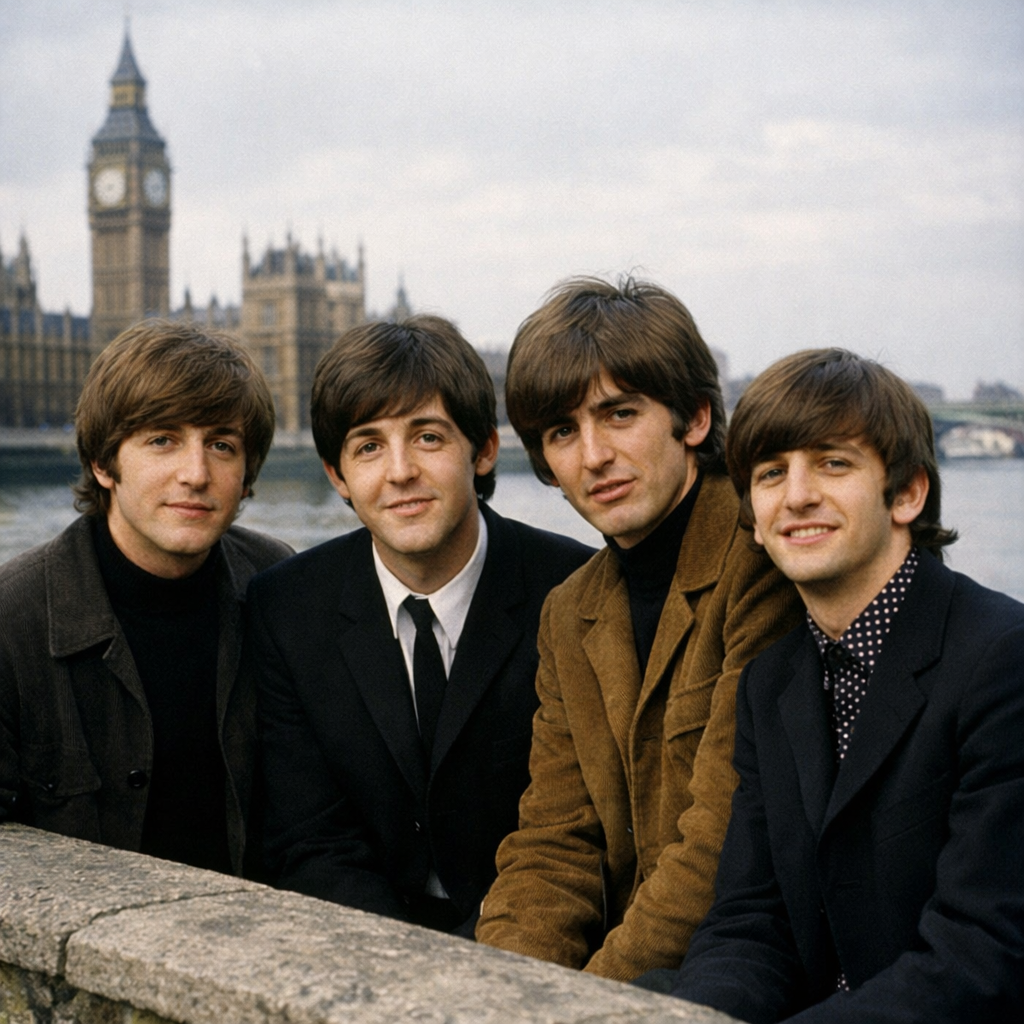
The Funeral in Satin: How Sgt. Pepper Killed the Beatles to Save Music
It is perhaps the greatest irony in the history of pop culture that the most colorful, vibrant album ever recorded was, at its core, an act of mourning. When the needle dropped on June 1, 1967, introducing the world to the fictional Sgt. Pepper’s Lonely Hearts Club Band, the world cheered the arrival of the Summer of Love. But if you listened closely, past the brass bands and the barnyard animal noises, you could hear the distinct sound of a door slamming shut.
To understand Sgt. Pepper, one must ignore the mythology of the "peace and love" generation and look at the cold, hard reality of 1966. The Beatles were not happy. They were exhausted men in their mid-20s, trapped in a gilded cage of their own making. Beatlemania had devolved from a cultural phenomenon into a terrifying physical threat. They were being mauled in the Philippines, burned in effigy in the American South, and deafened by the screaming girls at Candlestick Park. They could not hear themselves play; they were no longer musicians, they were merely avatars for global hysteria.
So, they quit. They retired from the road. And in doing so, they faced an existential crisis: If a rock and roll band doesn't play rock and roll concerts, do they still exist?
Paul McCartney’s solution was brilliant in its desperation: If "The Beatles" were too famous to be creative, they had to stop being The Beatles. They needed a mask. By donning the fluorescent satin military suits of a fictional Edwardian brass band, Lennon, McCartney, Harrison, and Starr liberated themselves from the suffocating expectations of the Moptop era. This wasn't just a concept album; it was method acting. As "Sgt. Pepper's Band," they didn't have to write three-minute love songs for teenagers. They could be vaudevillians, avant-garde composers, and surrealists.
This shift marked the moment rock music demanded to be treated as High Art. Before 1967, the LP (Long Play) was largely a marketing tool—two hit singles padded with ten minutes of filler. Sgt. Pepper destroyed that format. It was a holistic sonic architecture, designed to be consumed from start to finish. It was the first time a rock band utilized the recording studio not as a way to capture a live performance, but as an instrument itself.
Under the tutelage of producer George Martin, the band replaced the sweat of the stage with the intellect of the laboratory. They cut up magnetic tapes and threw them in the air to create the circus atmosphere of "Being for the Benefit of Mr. Kite!"; they utilized a 40-piece orchestra not for lush backing, but for a chaotic, atonal crescendo in "A Day in the Life." They moved away from the pentatonic blues scales that defined American rock and embraced Indian ragas, music hall joviality, and stockhausen-esque sound collages.
The cultural impact was seismic. By printing the lyrics on the back cover—a first for a pop record—they forced the audience to read the music as poetry. The cover art, a crowded collage of high-brow figures (Marx, Jung, Poe), suggested that The Beatles now sat at the same table as the world’s greatest thinkers.
However, the album's true genius lies in its finale, "A Day in the Life." It is the ultimate synthesis of the Lennon-McCartney dichotomy: John’s cynical, observational dread of the modern world ("I read the news today, oh boy") crashing into Paul’s nostalgic, upbeat mundanity ("Woke up, fell out of bed"). The song ends not with a fade-out, but with a thunderous E-major piano chord that sustains for over forty seconds. It is a sound that feels like a heavy, final period at the end of a sentence.
That chord signaled the end of innocence. It was the death knell of the "Yeah, Yeah, Yeah" era. Sgt. Pepper’s Lonely Hearts Club Band didn't just change the way music sounded; it changed the way music was perceived. It drew a line in the sand of history. On one side was "Pop"—disposable, ephemeral entertainment. On the other side was "Rock"—a serious, artistic pursuit capable of changing the world.
The Beatles died in 1966 so that music could grow up in 1967. And as the applause fades on the title track, we realize that the act we've known for all these years wasn't really them at all. It was something far better: it was Art.

 English
 French
 Spanish
 Portuguese
 Deutsch
 Turkish
 Dutch
Dutch
 Italiano
 Russian
 Romaian
 Portuguese (Brazil)
 Greek
Greek