The Rust is Gone, The Chrome is Blinding: Why Metal’s Fracture is Its Salvation
Stop me if you’ve heard this one before: "Metal is dead." "There are no new headliners." "Nobody plays guitar solos anymore."
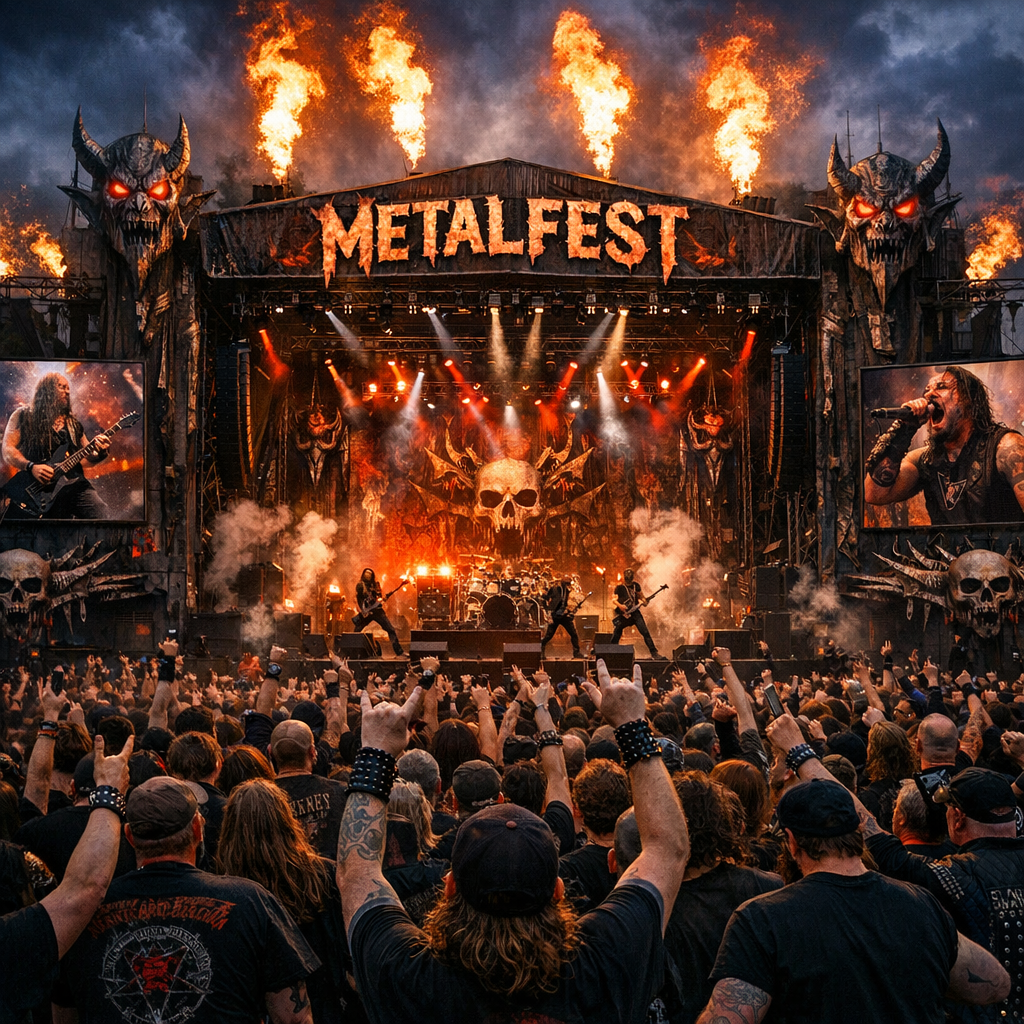
We see these headlines cycled through the big magazines every six months. They trot out a member of KISS or some disillusioned producer from the 80s to tell us that the fire has gone out. But if you actually live in this scene—if your boots are sticky with venue floor residue and your ears are ringing on a Tuesday morning—you know that’s absolute garbage. The issue isn’t that metal is dying. The issue is that metal has shattered into a million jagged, beautiful pieces, and the old guard doesn’t know how to hold them anymore.
For decades, the metal community worshipped at the altar of the Monolith. We had the Big Four. We had the main stage at Ozzfest. We had a unified culture where you were either Thrash, Death, or Black, and god help you if you tried to mix them. It was tribal. It was safe.
But look at the landscape in 2024. The monolith has crumbled, and thank god for that.
We are living in the era of the "Sonic Fracture." The most exciting heavy music right now isn't coming from bands trying to rewrite Master of Puppets. It’s coming from kids in bedrooms who don’t care about the rules. We’re seeing a collision of worlds that shouldn’t work, but somehow do. You have bands like Sleep Token or Bad Omens bringing R&B sensuality into downtuned Djent riffs, creating a sound that makes purists vomit but makes 20,000 people scream the lyrics in unison. You have the trap-metal scene, where the distortion comes from an 808 bass so blown out it feels like a physical punch to the gut, merging hip-hop swagger with hardcore aggression.
This isn't "selling out." This is evolution.
The gatekeepers—the guys standing at the back of the venue with their arms crossed, judging the patch jackets of the younger kids—are losing the war. And that’s the best thing that could happen to us. The internet didn’t kill the underground; it globalized it. A blackened-death-core band from a basement in Jakarta can now trade riffs with a slam band from Manchester. The cross-pollination is moving faster than the magazines can print.
There is a human cost to this, of course. The mystery is gone. We used to hunt for bootleg tapes; now we have Spotify data. But what we lost in mystery, we gained in vulnerability. The lyrical content has shifted. It’s less about dragons and Satan, and more about mental health, trauma, and existential dread. The mosh pit used to be a place of violence; now, increasingly, it’s a place of catharsis. Watch a modern hardcore show. People aren’t just hitting each other; they are exorcising demons. The music has become a soundtrack for a generation that feels like the world is burning down around them.
And isn't that what metal was always supposed to be?
It was never about leather pants or how fast you can sweep pick an arpeggio. It was about the noise. The friction. The resistance. It was about taking the ugliness of the world and screaming it back until it sounded like a melody.
So, let the boomers complain that rock radio is dead. Let them say the festivals are too diverse. They are looking for a ghost. Meanwhile, the rest of us are down here in the mud, listening to a band that mixes saxophone with blast beats, watching the genre mutate into something unrecognizable, terrifying, and completely alive.
Metal isn’t a statue to be polished. It’s a virus. And right now, the infection rate is higher than ever. Put your ear to the ground. You can hear the fracture. It sounds like the future.





 English
 Arabic
 French
 Spanish
 Portuguese
 Deutsch
 Turkish
 Dutch
Dutch
 Italiano
 Russian
 Portuguese (Brazil)
 Greek
Greek